
PRATO, ITALY – The first thing the firefighters saw was the arm sticking out of the barred window on the second floor of the factory. Flames reached through the partially collapsed roof and a high column of smoke darkened the winter sky. This fire had been burning for some time.
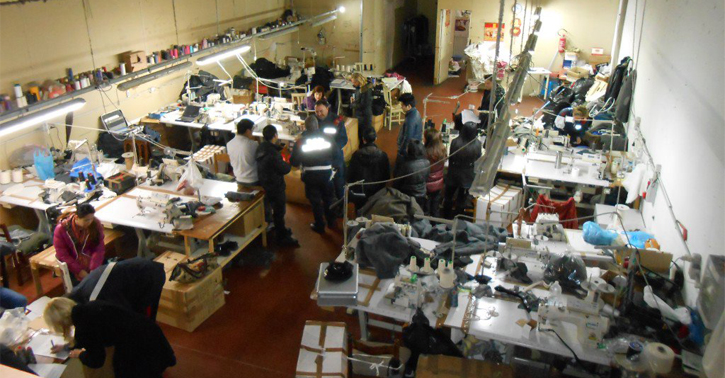
The fire station is two minutes from the Teresa Moda garment factory, on the edge of the main industrial zone of Prato, a town outside Florence. The zone was developed for Italian textile manufacturers in the 1980s but now is predominantly Chinese.
The first squad arrived around 7 a.m. Priority No. 1 was the arm in the window. A firefighter raced up a ladder, cut through the bars and pulled out the slight, smoke-black body of a man. The operation took less than five minutes.
Each second mattered.
It was near dawn on a Sunday morning, but firefighters knew they would find more people inside. There were always people inside the Chinese factories.
The fire that destroyed the Teresa Moda factory on Dec. 1, 2013, was the deadliest in living memory in Prato. It exposed the true cost of cheap clothes, laying bare the consequences of years of failed law enforcement and the pursuit of profit over safety.
Prato is the epicenter of a thriving, illicit Chinese economy that has grown in the wake of Chinese immigration. More than 40,000 Chinese live in the city — some 15,000 of them illegally. Many migrants have replicated the habits of home and created a kind of outsourcing. Merchandise isn’t exported; China itself is.
Thousands of people have been smuggled into Italy, finding work at factories that ignore basic safety standards, while billions of euros are smuggled back to China, police investigations show. The savings on tax and labor costs have given businesses that don’t follow the law a crushing competitive advantage.
Many say illegal factories such as Teresa Moda are part of larger criminal networks in China and Italy. Police and prosecutors said they lack the tools to tackle the flow of migrants and money that fuel Prato’s black economy. The two countries do not cooperate closely in criminal investigations.
Fire chief Vincenzo Bennardo, a stocky, bald man whose phone ring mimics a siren, arrived after the body from the window was brought to the ground and was covered. He found two Chinese women outside the factory, crying, but untouched by smoke.
The younger one spoke some Italian and acted as a translator. Prato has one of the highest concentrations of Chinese in Europe, but not a single Chinese firefighter.
The fire was eating through the building fast. Bennardo needed to know how many more people were inside and where to look for them.
“Are there other people?” he asked the women. “Do you know how many?”
They kept gesturing, agitated, at the factory, but said little. Bennardo tried a different tack. He asked if they knew the dead man. They said yes. Then they hedged. They told Bennardo they were neighbors and thought the man worked in the factory.
Maybe the women needed to see the dead man’s face. A paramedic pulled back the sheet. The man looked like he had been cooked.
“Who is this? Do you know him or not?” Bennardo said.
The women cried harder now. They wrote down the dead man’s name.
“Do you know exactly how many people were inside?” Bennardo pressed. How many people did his men need to find?
This time younger woman answered: “There’s a little boy.”
Bennardo got into the fire business because he wanted to connect with people, out on the streets. Two years ago, he signed up for a free Mandarin course offered by the local government. If you want to understand people, Bennardo figured, you have to grasp how they think. But he didn’t get past six lessons. ” ‘Ni hao,’ I think that means, ‘Ciao,’ ” Bennardo said.
He grew up in Turin, an integrated, multiethnic city, unlike Prato. On one side of Prato’s old stone walls, people stroll through piazzas, past renowned frescoes and striated marble churches. On the other side, slot machines, massage parlors and Chinese graffiti offering jobs, shared rooms and paid female companionship punctuate the plain streets of Chinatown.
The Teresa Moda factory sat on a short street with scraggly trees, in a grid of blind corners and dead ends called Macrolotto 1.
Every Tuesday and Friday night, the dim streets of this industrial zone blaze with headlights as buyers load cheap, trendy clothes onto trucks. Many are headed for other towns in Italy, France or Germany, while 4 percent of Prato’s clothing exports, which totaled €551 million ($696 million) last year, finds its way to the United States, according to Italy’s National Institute for Statistics.
The factory churned out cheap “fast fashion” garments for sale across Europe. In an industry that thrives on speed, factories such as Teresa Moda have the advantage of being close to their main market. They also can trade on the cachet of the “Made in Italy” brand, though their clothes are made by Chinese workers in Chinese factories.
In the 1980s, Chinese immigrants began moving to Italy from the area around Wenzhou, a city famous for its entrepreneurs. Prato offered Chinese migrants ample subcontracting work, a steady stream of buyers and an existing industrial infrastructure. A high percentage of those migrants have gone to found businesses.
Despite the global financial crisis, the number of individually owned Chinese businesses in Prato grew 35 percent from 2008 to 2013, while the number of European ones shrank, according to the Italian Chambers of Commerce.
Critics say that growth was possible because migrants brought a cultural disregard for regulations that do not maximize profit. Prato authorities have raided over 1,900 Chinese factories in the past 6½ years, closing 909 for gross safety and labor violations, and seized 33,427 sewing machines that were not up to code.
Chinese companies often open and close quickly to avoid tax and regulatory scrutiny, officials said.
Prosecutors would spend months trying to prove a woman named Lin You Lan was in charge of Teresa Moda and that the legal owner was a front. They also said Teresa Moda was the fourth factory that Lin and her sister had run out of the same building on Via Toscana since 2008.
Lin’s defense lawyer, Gabriele Zanobini, contests both points. He said she was an employee, responsible for supplier relationships and administration, and that neither Lin nor her sister ever owned a business at the address.
To the Italian brothers who owned the factory building, Lin You Lan was “Monica.” To the workers, prosecutors said, she was “boss.” To Bennardo, she was the face of a problem he had not been able to solve.
He kept a fire safety booklet, translated into Chinese, in his office, part of his community outreach effort. He realized a booklet wouldn’t change a culture, but he wanted Prato’s Chinese to know that fire extinguishers could be thought of as a good investment. At the least, maybe they’d learn what number to dial when there was a fire. Bennardo only got a call when things went really wrong.
Ten minutes before the fire station got the call about the Teresa Moda fire, Lin You Lan’s cellphone rang. It was her sister, Lin Youli, who managed the daily operations of the factory with her husband, Hu Xiaoping. They lived at the factory with their 5-year-old son, Giorgio.
Bennardo could have used those 10 minutes.
The first call to the fire department came at 6:55 a.m. Over the next 22 minutes, the fire department would receive 27 more calls about the fire. Only one came from a Chinese person.
Teresa Moda’s workers had been up until nearly 2 a.m. sewing. Like many Chinese workers in Prato, they slept at the factory, in violation of Italian law, in a two-story row of bedrooms adjacent to a makeshift kitchen.
Chen Changzhong had been working there for seven months. According to court documents, he put in 13 hours to 17 hours a day for €2 to €3 an hour. It was a fraction of Italy’s legal minimum wage, but more than he was likely to earn back home. He and five co-workers were in Italy illegally. He said he paid for his €1,500 flight from Beijing himself.
It is not clear how poor Chinese migrants afford their plane tickets. Some pay smugglers thousands of euros to come to Italy, where they are exploited as low-cost labor to pay off their debt, according to Italy’s National Antimafia Directorate.
There was no fire alarm at the Teresa Moda factory. The heat finally startled Chen awake.
His room wasn’t far from the bathroom. He thought he could douse himself before running through the flames, but he never made it to the shower. He couldn’t breathe.
There are trade-offs in making shirts that wholesale for less than €5. In Teresa Moda’s case, this meant forgoing not just a fire alarm, but also adequate fire extinguishers and emergency sprinklers, investigations would show. No one had bothered to bring the heavy front door up to code, either. Prosecutors said it was too hard to slide open.
There were no emergency lights to guide Chen out of his dark, 3-meter-wide room. There were no back or side exits because the factory abutted warehouses on three sides. An emergency exit in the rear led to the roof, but on the day of the fire more than 5.5 tons (5,000 kg) of flammable fabric was stacked there, high as the mezzanine level bedrooms, according to prosecutors. Firefighters said the exit was blocked. A defense attorney would later say it wasn’t.
Chen figured he had one way out: The huge sliding door at the front. Between him and the door lay rolls of burning fabric, clothing racks, buttons, belts, cardboard boxes, and sewing machines.
His hand was on fire. He ran with all his might.
Bennardo needed a number. His crews still had no idea how many people to look for. The two Chinese women outside called around on their mobile phones to see if anyone had escaped. But they weren’t saying much to Bennardo.
The chief, his deputy, and a variety of police officers took turns asking them: Who was in the factory? Who was missing? Who escaped?
Bennardo figured the women wanted to help, but didn’t want to identify workers living in Italy illegally unless they were dead.
Inside, four firefighters worked the floor, spraying the flames as they pressed forward. The masked firefighters could barely see. To their right was an 8.5-meter concrete wall. Adjacent to the wall and above it, bedrooms had been slapped up with wood and drywall for the factory workers. Two firefighters busted through with pickaxes and looked for survivors. They found beds, but no people.
The fabric burning around them released a toxic gas, chloric acid, which sears mucous membranes and attacks the lungs. They found the remains of a tricycle. Where was that little boy? One young firefighter thought he heard a child’s voice circling in the flames. He had never seen a dead kid before and didn’t want to now.
They found the second body on the factory floor, in a pile of ashes.
One or two factories catch fire every month in Prato; some are Chinese, some Italian. But in 20 years on the force, Giuseppe Scannadinari could not recall a fire that consumed so many, so completely.
Only the trunk, head and leg remained of the second man.
“We got very little of this one,” he said. “Not pretty.”
The two Chinese women watched the second body come out.
It was a tacit negotiation. With each body recovered, the hope of survival gave way to the certainty of death and the women surrendered more information.
After the third body emerged, Bennardo sensed a shift. The women, more cooperative now, drew a rectangle on a piece of paper to represent the factory and started writing down who slept where.
By midday, five hours after they began questioning the two Chinese women, firefighters finally had a map of the factory and a list of 11 people to look for.
At the back of the factory, not far from the emergency exit, firefighters found a black mass, carbonized but recognizably human. Whoever was there had been packed in burning material, from above and below, like an oven. It was impossible to tell how many people had been huddled together.
A forensics expert went in to search through the bones while the fire still was smoking. Counting pelvises, he concluded there were parts of three people. Two had probably been petite women. It would take more than 24 hours to determine whether the third was male or female.
Nearly four dozen people worked until noon the next day to put the fire out. Soft plumes of smoke rose from the ashes and bent metal of the factory. There was a bitter smell, like ammonia.
The little boy, Giorgio, survived. He and his parents, who managed the factory, had scrambled the short distance from their concrete-walled bedroom to the front door. Chen was the sole worker to escape.
Seven people had died.
Prosecutors said the deaths were preventable.
Authorities have tried for years to wipe out Prato’s shadow economy, but their efforts have been thwarted by unscrupulous entrepreneurs and formidable cultural barriers.
Gino Reolon, the provincial commander of Italy’s financial police, said Prato is like a laboratory for tracking Chinese organized crime.
“It’s like a virus, a new disease and we are now trying to figure out what it does,” he said.
Prato’s police have raided and closed hundreds of illegal Chinese factories. But factory owners rarely bother to fix safety and labor violations, said Flora Leoni, a municipal police captain. Instead, many open a new business, often in a relative’s name, she said.
Police have marched scores of immigrants with no papers back to headquarters, where they are photographed, fingerprinted and ordered to leave Italy within five days. Then they are free to go.
It’s been even easier for migrants to slip away since a 2011 directive that barred jailing people during deportation proceedings, Leoni said. Judicial officials now complain about a new law that makes it difficult to try people in absentia, slowing trials of hard-to-find Chinese defendants.
“There is not a lot of fear,” Leoni said. “They know quite well that our weapons are blunted.”
In the past, grave fire safety violations, long hours and illegal labor had meant good business. This time, though, they added up to homicide.
On March 20, nearly four months after the blaze, prosecutors charged five people with homicide: the “boss” Lin You Lan, the managers Lin Youli and Hu Xiaoping, and the Italian brothers who owned the factory building, Giacomo and Massimo Pellegrini.
The Lin family sent 900,000 yuan ($147,000) to each dead worker’s family in China. Defense lawyer Zanobini said the payments were made out of a sense of moral responsibility, not an attempt to derail the trial. He argued that Lin and her family were not guilty because the workplace violations did not cause the fire and the Italian building owners bore responsibility for the worst safety lapses.
The lawyer for the Pellegrini brothers, Alberto Rocca, said he is convinced of their innocence. He declined further comment because the trial is ongoing.
Prosecutors took the unusual step of holding Italians accountable, a significant move given that many have profited from Chinese abuses.
“If the responsibility also lies with the Italian citizen who knowingly permits these situations of illegality, then the next time the Italian citizen probably won’t let it happen,” said Tiziano Veltri, a lawyer for some of the victims’ families.
The funeral for the victims of the Teresa Moda fire took place on the third Saturday of June, after months of contention about how to cover the cost.
Volunteers handed out water to the crowd in the heat. The Italians, mostly, stayed to the left. Chen Changzhong listened from a shaded spot of grass to the right, with the rest of the town’s Chinese. A shiny scar snaked around his thumb and up his left arm, the burn a mark of survival.
Outrage at the deaths had reached parliament, where politicians spoke of “slavery in the heart of Italy.” Prato’s mayor lobbied the prime minister for help. The region of Tuscany launched inspections of all 7,700 factories in Prato, and offered each victim’s family €20,000 to €25,000.
The Chinese consulate in Florence rallied more than 400 local Chinese businesses to sign a voluntary pledge banning illegal bedrooms and makeshift kitchens. Two carabinieri carried in a heavy wreath from the Italian president. The mayor spoke. The Chinese consul general urged factory owners to make their workplaces safer. “All of us should reflect profoundly, learn this lesson of blood,” she said.
One woman followed her mother’s coffin toward the hearse, but her knees kept giving out. People tried to hold her up, but she shook her head back and forth, before sinking to the ground. Italian first-aid workers circled her to help.
Grief was something everyone could understand.
Bennardo missed the funeral. He had to go to Turin to see his ailing mother. From that distance, Prato seemed still and small, a town waiting for change that would take a generation to come. Monday morning, Prato’s schools swelled with Chinese, one foreigner for every three Italians. Bennardo went back to work, to wait for the next fire.
普拉托,ITALIA – 消防队员看到的第一件事是看到在工厂二楼的窗口伸出的手臂。。火焰到达了部分坍塌的屋顶,一团高高的浓烟遮蔽了冬天的天空。这场大火已经燃烧了一段时间了。
消防所距离特雷莎莫达服装厂(Teresa Modo)大约两分钟路程,位于佛罗伦萨郊外城市普拉托(Prato)的主要工业区边缘。该地区是为意大利纺织品制造商在20世纪80年代开发的,但现在主要是华人工场。
第一支消防队于上午7点左右到达。首先救援的是那个从二楼窗户伸出手臂的人。一名消防队员跑上梯子,穿过栏杆,拖出那个身上还冒着黑烟的个男人。整个过程不到五分钟。
时间就是生命。
那是星期天的清晨,但消防队员知道他们会在里面找到更多的人。华人工场里总有人住在里面。
特蕾莎·莫达(Teresa Modo)的工厂是在2013 年 12 月 1 日发生火灾,这是普拉托有史以来遇难最多的一场火灾。它揭示了廉价服装的真实成本,揭露了多年缺失安全法规的监督和安全收益的后果。
普拉托(Prato)是繁荣的中心,的华人的非法经济是随着华人移民之后增长的。4万多名中国人居住在该市,其中约15,000人非法居住。许多移民复制了他们的家庭习惯,并创造了一种外包形式。货物不出口;
警方调查显示,许多人被偷运到意大利,在缺失基本安全条件的工场打工,而数十亿欧元由地下钱庄流向中国。偷税和低劳动力成本的节省使得那些不遵守法律的企业具有破坏性的竞争优势。
许多人声称,像特雷莎·莫达Teresa Moda这样的非法工厂是在中国和意大利大型犯罪网络的一部分。警方和检察官表示,他们没有手段来处理移民和资金流动,而这些流动助长了普拉托的黑色经济。并且两国在刑事调查方面没有密切合作
消防队长文森佐·本纳尔多(Vincenzo Bennardo),一个强壮的秃头男子,他的电话铃声模仿警笛,他赶到时消防队员已经从窗户把那个尸体带到地面上并床单盖住,。他看到工厂外的两名中国妇女哭泣着,但没有被烟熏到。
其中年轻一点的女人会说一点意大利语,临时做翻译。普拉托是欧洲华人最集中的地方,但没有一个华人消防员。
大火很快吞噬了大楼。本纳尔(Bennardo)要知道里面还有多少人,他们在厂房的什么位置。
“还有其他人吗?你知道有多少?本纳尔(Bennardo)问道”
,但她们只会说一点意大利语,她们在工厂外只能不停地激动打手势。本纳尔(Bennardo)尝试了不同的策略。他问他们是否认识那个遇难者。她们说是的,因此,她们用床单掩盖了他。她们告诉本纳尔多(Bennardo),他们都认识,肯定那个人是在那个工打场工。
也许女人需要看看死者的脸,一个护理人员把床单拉开。看起来好像是煮熟了。
“这是谁?你认识他吗?本纳尔多(Bennardo)说。
现在,女人哭得更厉害了。她们写了死者的名字。
“你知道到底有多少人吗?本纳尔多按下。他的部下必须找到多少人?
这一次,更年轻的那个女人回答说:”里面有个小孩子。
本纳尔多进入消防队是因为他想接触更多的人。两年前,他参加了当地政府提供的免费普通话课程。如果你想理解别人,本纳尔多想,你必须理解他们的想法。但他没有通过这六节课。”你好””我想它的意思是”Ciao”本纳尔多说。
他在都灵长大,这是一个综合性的多民族城市,不像普拉托。在普拉托古石墙的一侧,人们漫步在广场上,经过著名的壁画和条纹大理石教堂。另一方面,中国老虎机、按摩室和提供工作的涂鸦、共用房间和付费女性点缀着唐人街的大街小巷。
特雷莎·莫达(Teresa Moda)的工厂位于一条狭窄的街道上,树木稀疏,参差不齐,死角和死胡同成网格,称为Macrolotto 1。
每个星期二和星期五晚上,这个工业区的黑暗街道都挤满人群和闪烁着车灯,购物者把廉价时髦的衣服装上卡车。据意大利国家统计研究所统计,许多服装都前往意大利、法国或德国其他城市,而普拉托的服装出口额(去年总额为5.51亿欧元(6.96亿美元)的4%出口到美国。
这家工厂生产了”快销时尚”服装,在欧洲各地销售。在一个速度迅速蓬勃发展的行业,像特雷莎·莫达这样的工厂具有接近主要市场的优势。他们也可以用”意大利制造”品牌的进行交易,即使他们的衣服是由华人工厂的中国工人制造的。
20世纪80年代,中国移民开始从温州周边地区移居意大利。普拉托为中国移民提供了的充足外包工作、源源不断的买家和现有的工业基础设施。这些移民中有很大一部分去创办自己的工场。
意大利商会的数据显示,尽管受到全球金融危机的影响,2008年至2013年,在普拉托拥有的中国企业数量仍增长了35%,而欧洲企业的数量则有所下降。
批评人士说,增长是可能的,因为移民无视不能使利润最大化的法规的文化。。普拉托当局在过去6年半中突击搜查了1900多家中国工厂,关闭了909家严重的安全和劳动违规事件,并没收了33,427台不符合规范的缝纫机。
官员们说,中国企业经常迅速打开和关闭,以避免税收和监管审查。
检察官将花费数月时间试图证明一位名叫林友兰(Lin You Lan)的女子是特雷莎·莫达的负责人,而老板是一个幌面。他们还说,特雷莎·莫达是林和她的姐妹自2008年以来在Via Toscana的同一栋楼里的更换了的第四家工厂。
林的辩护律师加布里埃尔·扎诺比尼(Gabriele Zanobini,)对两点都存在争议。她说,她是一名雇员,负责供应商关系和行政管理,林和她的妹妹都没有在这个地址拥有一家企业。
对于拥有这家工厂的所有权的意大利兄弟来说,林友兰又名”莫妮卡””Monica”。检察官说,对于这些工人来说,她是”老板”。对本纳尔多来说,这是一个无法解决的问题。
他在自己的办公室有一本有关消防安全的小册子,并翻译成中文,这是他的社区宣传活动的一部分。。他意识到一本小册子不会改变一种文化,但他希望普拉托的华人知道灭火器可以被认为是一个很好的投资。至少,也许他们会知道在发生火灾时要拨什么号码。本纳尔多有接到过一次电话但是在灾情变得很糟糕的时候。
消防队接到关于特雷莎·莫达着火的电话前十分钟,林友兰的手机响了。是她的妹妹林友利(Lin Youli)和她的丈夫胡小平一起管理工厂的日常运营。他们和他们5岁的儿子乔治(Giorgio)住在工厂里。
本纳尔多本来可以用那10分钟
第一个电话是早上6点55分打来的。在接下来的22分钟里,消防队员将接到另外27个关于火灾的电话。只有一个来自华人的呼叫。
特雷莎·莫达的工人缝制工作直到凌晨2点左右,和许多在普拉托的中国工人一样,他们睡在工厂里,违反了意大利法律,睡在一间临时厨房旁边的两层楼的卧室里。
陈长忠(Chen Changzhong)在那里工作了七个月。根据法庭文件,他每天工作13小时至17小时,每小时工作2至3欧元。这仅是意大利法定最低工资的一小部分,但比他在国内挣的还多。他和五名同伴在意大利非法居留。他说他自己在北京付了1500欧元启程的机票。
目前还不清楚贫穷的中国移民是如何自己获得机票的。据国家反黑手党局称,一些蛇头为要来到意大利打工的移民预先支付了数千欧元,然后在到了意大利后在他们那里被剥削以廉价劳动力来偿还债务。
特雷莎·莫达的工厂没有火警警报。热浪让陈热得从床上跳了起来。
他的房间离浴室不远。他想他能尽早地穿过烈焰,但他根本无法靠近浴室,浓烟呛得使他无法呼吸。
制作一件衬衫的批发价低于5欧元。
经过现场勘察结果是,就特雷莎·莫达而言,不仅缺乏火灾警报,而且不具备必须的灭火器和紧急洒水器,检察官说,没有人能够将安全生产法规引入这些工厂,这太难了。
没有应急灯来引导陈从他3米宽的黑暗房间里出来。没有后出口或侧出口,因为工厂的三个边与仓库接壤。据检察官说,厂房后面有个的紧急出口通向屋顶,但在火灾当天,堆积了5.5吨(5,000千克)以上的易燃织物堆放得和阁楼一样高,来。消防队员说出口被封锁了。辩护律师后来表示说没有出口。
陈先生知道有出口:就在前面有个巨大的滑动门。当他和门之间堆放着燃烧的布料、衣架、纽扣、皮带、纸板箱和缝纫机。
尽管他的手着火了他奋力地跑着。
本纳多需要一个数字,他的队员们仍然不知道有多少人需要帮助。外面的两个华人妇女打电话四处打电话,看看是否有人逃出来了。但她们对本纳尔多说的更多。
多名警察轮流问工厂老板和他的助手:当时谁在工厂里?谁失踪了?谁逃跑了?
Bennardo认为这些妇女想帮忙,但她们不想指认那些非法居留在意大利的非法劳工,除非他们死了。
里面,四名消防队员在工场里一边用水喷向火焰同时向前推进,他们的右边是一堵8.5米高的混凝土墙。 毗邻墙壁和墙壁的上方,用木头和石膏板隔成的卧室里供工厂工人使用。两名消防队员破门而入,搜寻幸存者。他们只找到空床。
布料在他们周围燃烧着并释放出一种有毒气体,氯酸,它燃烧粘液并刺激肺部。他们发现了一辆儿童脚踏三轮车的残骸。那个孩子在哪?一位年轻的消防队员认为他听到了一个孩子在火焰中的声音。他从未看到死去的孩子,现在也不想。
他们在工厂车间地面上的一堆灰烬中发现了第二具尸体,。
普拉托每月有一两家工厂着火;有些是中国人的,有些是意大利人的。但经过20年的努力,朱塞佩斯坎纳迪纳里(Giuseppe Scannadinari)就没有一次像这场大火,这么多人遇难,这么惨烈。
第二个遇难者仅剩躯干、头和腿。
太惨了他说。
两位中国妇女看到第二具尸体抬了出来。
这是一个沉默的较量。每找到一具尸体,生存的希望让位于死亡的确定性同时那两妇女提供了更多相关的信息。
当找到第三个遇难者后,本纳尔多察觉到了一些变化。那两个妇女现在显得更愿意合作,她们在一张纸上画了一个长方形来代表工厂,写下谁睡在哪个位置。
中午时分,在他们开始询问这两名中国妇女5小时后,消防队员终于有了一张工厂地图和11人的名单。
在工厂的后面,离安全出口不远,消防队员发现了一堆黑色的物体,烧焦了,但可以辨认出来是人。就像谁被包装在燃烧的材料里,从上到下,像烤箱里出来似的。很难说到底有多少人被聚集在一起。
一名法医专家在火仍在冒烟时对骨头进行搜寻。算了一下盆骨,他得出的结论是三个人,中有一部分人。他得出结论,两个可能是小女人。需要24小时以上才能确定第三人是男性还是女性。
将近四十人工作到第二天中午才把火扑灭。轻烟从工厂的灰烬和弯曲的金属中升起。有一股苦味,像氨气。
小男孩乔治(Giorgio)活了下来。他和经营这家工厂的父母从水泥墙的卧室爬了一小段路到大门。陈(陈)是唯一逃生的工人。
七人遇难。
检察官确定地说,这个灾难是本可以避免的。
多年来,当局一直试图消灭普拉托的黑色经济,但他们的努力却遭到不择手段的不道德企业家和巨大的文化壁垒的阻挠。
意大利税务警察省指挥官吉诺·雷隆(Gino Reolon)说,普拉托就像一个实验室,可以追踪中国的有组织犯罪。
“这就像一种病毒,一种新的疾病,现在我们试图找到解决的办法”他说。
普拉托警方突袭并关闭了数百家非法中国工厂。但市警察局长弗洛拉·列奥尼(FloraLeoni)说,但是工厂主很少关心解决安全生产隐患和黑工的问题,。相反,许多人开了一家新公司,通常使用另一个亲戚的名字,他说。
警察将数十名无证移民押到警察局,在那里他们被拍照、按指纹,并下令在五天内离开意大利。所以他们可以自由离开。
Leoni说,移民更容易逃脱2011年禁止在递解出境程序期间被关押的指令。司法官员现在抱怨一项新的法律,使得很难缺席起诉这些人,从而减缓了对难以找到的华人被告的审判。
“他们并没有太多的恐惧,”列奥尼说。”他们很清楚,我们的现有法律对他们是无力的。
过去,严重的消防安全违规、超长时间工作和黑工意味着能挣更多的钱。然而,这一次,他们制造了谋杀。
3月20日,在火灾发生近4个月后,检察官以谋杀罪起诉5人:”老板”林友兰(Lin You Lan)、高管林友利(Lin Youli)和胡小平(Hu Xiaoping),以及拥有该建筑的意大利兄弟贾科莫(Giacomo)和马西莫·佩莱格里尼(Massimo Pellegrini.)。
林家已经向每个死去的工人在中国亲属寄了90万元(14.7万欧元)。辩护律师扎诺比尼(Zanobini)说,支付这笔款项是出于一种道德责任感,而不是试图破坏这一审理。他辩称,林和他的家人无罪,因为工作场所的违规行为没有引起火灾,意大利业主对最严重的安全隐患负有责任。
佩莱格里尼兄弟的律师阿尔贝托·罗卡(Pellegrini, Alberto Rocca)说,他确信他们的清白。他拒绝进一步置评,因为这个案件审理正在进行中。
检察官采取了不同寻常的步骤,追究意大利人的责任,鉴于许多人利用了华人的侵权行为,这是一个重大举措。
“如果责任也落在意大利公民身上,在知道这些是违法情况下,下一次意大利公民可能不会让这种情况发生下,”一些受害者家属的律师Tiziano Veltri说。
特蕾莎·莫达火灾遇难者的葬礼在6月的第三个星期六举行,经过几个月的讨论,如何支付这些费用。
志愿者们在炎热的天气里向人群分发水。意大利人,大部分时间,仍然留在左边。陈长忠和来自城里的其他华人一起在右边的一片遮阳的草地听。灼伤疤痕缠绕在拇指和左臂上,那是生存的象徵。
对死亡事件的愤怒已经传到议会,政治家们谈到”意大利心脏地带的奴隶制”。普拉托市长游说总理寻求帮助。托斯卡纳地区已开始检查普拉托的所有7 700家工厂,并向每位受害者家属提供2万至25,000欧元。
中国驻佛罗伦萨领事馆已经召集了400多家当地中国公司,签署一项禁止在工作场所使用非法卧室和临时厨房的自愿协议。两名宪兵带来意大利总统送来的沉重花圈。市长讲了话。中国驻纽约总领事呼吁工厂主提高工作场所的安全。”我们都应该深入思考,用鲜血吸取教训,”他说。
一位妇女跟着她母亲的棺材来到灵道,但她瘫坐在地上。人们试图让她站起来,但她摇了摇头,然后倒在地上。意大利救援人员围着她帮助她。
痛苦是每个人都能理解的。
本纳尔多没能参加葬礼,他不得不去都灵看望生病的母亲。从那遥望着普拉托似乎渺但更坚定,城市等待着改变,但着需要一代人来改变。周一早上,普拉托的学校里挤满了中国人,每三个意大利人中有一个外国人。
本纳尔多回到工作岗位,时刻待命着。
Leave Comment
PRATO, ITALY – The first thing the firefighters saw was the arm sticking out of the barred window on the second floor of the factory. Flames reached through the partially collapsed roof and a high column of smoke darkened the winter sky. This fire had been burning for some time.
The fire station is two minutes from the Teresa Moda garment factory, on the edge of the main industrial zone of Prato, a town outside Florence. The zone was developed for Italian textile manufacturers in the 1980s but now is predominantly Chinese.
The first squad arrived around 7 a.m. Priority No. 1 was the arm in the window. A firefighter raced up a ladder, cut through the bars and pulled out the slight, smoke-black body of a man. The operation took less than five minutes.
Each second mattered.
It was near dawn on a Sunday morning, but firefighters knew they would find more people inside. There were always people inside the Chinese factories.
The fire that destroyed the Teresa Moda factory on Dec. 1, 2013, was the deadliest in living memory in Prato. It exposed the true cost of cheap clothes, laying bare the consequences of years of failed law enforcement and the pursuit of profit over safety.
Prato is the epicenter of a thriving, illicit Chinese economy that has grown in the wake of Chinese immigration. More than 40,000 Chinese live in the city — some 15,000 of them illegally. Many migrants have replicated the habits of home and created a kind of outsourcing. Merchandise isn’t exported; China itself is.
Thousands of people have been smuggled into Italy, finding work at factories that ignore basic safety standards, while billions of euros are smuggled back to China, police investigations show. The savings on tax and labor costs have given businesses that don’t follow the law a crushing competitive advantage.
Many say illegal factories such as Teresa Moda are part of larger criminal networks in China and Italy. Police and prosecutors said they lack the tools to tackle the flow of migrants and money that fuel Prato’s black economy. The two countries do not cooperate closely in criminal investigations.
Fire chief Vincenzo Bennardo, a stocky, bald man whose phone ring mimics a siren, arrived after the body from the window was brought to the ground and was covered. He found two Chinese women outside the factory, crying, but untouched by smoke.
The younger one spoke some Italian and acted as a translator. Prato has one of the highest concentrations of Chinese in Europe, but not a single Chinese firefighter.
The fire was eating through the building fast. Bennardo needed to know how many more people were inside and where to look for them.
“Are there other people?” he asked the women. “Do you know how many?”
They kept gesturing, agitated, at the factory, but said little. Bennardo tried a different tack. He asked if they knew the dead man. They said yes. Then they hedged. They told Bennardo they were neighbors and thought the man worked in the factory.
Maybe the women needed to see the dead man’s face. A paramedic pulled back the sheet. The man looked like he had been cooked.
“Who is this? Do you know him or not?” Bennardo said.
The women cried harder now. They wrote down the dead man’s name.
“Do you know exactly how many people were inside?” Bennardo pressed. How many people did his men need to find?
This time younger woman answered: “There’s a little boy.”
Bennardo got into the fire business because he wanted to connect with people, out on the streets. Two years ago, he signed up for a free Mandarin course offered by the local government. If you want to understand people, Bennardo figured, you have to grasp how they think. But he didn’t get past six lessons. ” ‘Ni hao,’ I think that means, ‘Ciao,’ ” Bennardo said.
He grew up in Turin, an integrated, multiethnic city, unlike Prato. On one side of Prato’s old stone walls, people stroll through piazzas, past renowned frescoes and striated marble churches. On the other side, slot machines, massage parlors and Chinese graffiti offering jobs, shared rooms and paid female companionship punctuate the plain streets of Chinatown.
The Teresa Moda factory sat on a short street with scraggly trees, in a grid of blind corners and dead ends called Macrolotto 1.
Every Tuesday and Friday night, the dim streets of this industrial zone blaze with headlights as buyers load cheap, trendy clothes onto trucks. Many are headed for other towns in Italy, France or Germany, while 4 percent of Prato’s clothing exports, which totaled €551 million ($696 million) last year, finds its way to the United States, according to Italy’s National Institute for Statistics.
The factory churned out cheap “fast fashion” garments for sale across Europe. In an industry that thrives on speed, factories such as Teresa Moda have the advantage of being close to their main market. They also can trade on the cachet of the “Made in Italy” brand, though their clothes are made by Chinese workers in Chinese factories.
In the 1980s, Chinese immigrants began moving to Italy from the area around Wenzhou, a city famous for its entrepreneurs. Prato offered Chinese migrants ample subcontracting work, a steady stream of buyers and an existing industrial infrastructure. A high percentage of those migrants have gone to found businesses.
Despite the global financial crisis, the number of individually owned Chinese businesses in Prato grew 35 percent from 2008 to 2013, while the number of European ones shrank, according to the Italian Chambers of Commerce.
Critics say that growth was possible because migrants brought a cultural disregard for regulations that do not maximize profit. Prato authorities have raided over 1,900 Chinese factories in the past 6½ years, closing 909 for gross safety and labor violations, and seized 33,427 sewing machines that were not up to code.
Chinese companies often open and close quickly to avoid tax and regulatory scrutiny, officials said.
Prosecutors would spend months trying to prove a woman named Lin You Lan was in charge of Teresa Moda and that the legal owner was a front. They also said Teresa Moda was the fourth factory that Lin and her sister had run out of the same building on Via Toscana since 2008.
Lin’s defense lawyer, Gabriele Zanobini, contests both points. He said she was an employee, responsible for supplier relationships and administration, and that neither Lin nor her sister ever owned a business at the address.
To the Italian brothers who owned the factory building, Lin You Lan was “Monica.” To the workers, prosecutors said, she was “boss.” To Bennardo, she was the face of a problem he had not been able to solve.
He kept a fire safety booklet, translated into Chinese, in his office, part of his community outreach effort. He realized a booklet wouldn’t change a culture, but he wanted Prato’s Chinese to know that fire extinguishers could be thought of as a good investment. At the least, maybe they’d learn what number to dial when there was a fire. Bennardo only got a call when things went really wrong.
Ten minutes before the fire station got the call about the Teresa Moda fire, Lin You Lan’s cellphone rang. It was her sister, Lin Youli, who managed the daily operations of the factory with her husband, Hu Xiaoping. They lived at the factory with their 5-year-old son, Giorgio.
Bennardo could have used those 10 minutes.
The first call to the fire department came at 6:55 a.m. Over the next 22 minutes, the fire department would receive 27 more calls about the fire. Only one came from a Chinese person.
Teresa Moda’s workers had been up until nearly 2 a.m. sewing. Like many Chinese workers in Prato, they slept at the factory, in violation of Italian law, in a two-story row of bedrooms adjacent to a makeshift kitchen.
Chen Changzhong had been working there for seven months. According to court documents, he put in 13 hours to 17 hours a day for €2 to €3 an hour. It was a fraction of Italy’s legal minimum wage, but more than he was likely to earn back home. He and five co-workers were in Italy illegally. He said he paid for his €1,500 flight from Beijing himself.
It is not clear how poor Chinese migrants afford their plane tickets. Some pay smugglers thousands of euros to come to Italy, where they are exploited as low-cost labor to pay off their debt, according to Italy’s National Antimafia Directorate.
There was no fire alarm at the Teresa Moda factory. The heat finally startled Chen awake.
His room wasn’t far from the bathroom. He thought he could douse himself before running through the flames, but he never made it to the shower. He couldn’t breathe.
There are trade-offs in making shirts that wholesale for less than €5. In Teresa Moda’s case, this meant forgoing not just a fire alarm, but also adequate fire extinguishers and emergency sprinklers, investigations would show. No one had bothered to bring the heavy front door up to code, either. Prosecutors said it was too hard to slide open.
There were no emergency lights to guide Chen out of his dark, 3-meter-wide room. There were no back or side exits because the factory abutted warehouses on three sides. An emergency exit in the rear led to the roof, but on the day of the fire more than 5.5 tons (5,000 kg) of flammable fabric was stacked there, high as the mezzanine level bedrooms, according to prosecutors. Firefighters said the exit was blocked. A defense attorney would later say it wasn’t.
Chen figured he had one way out: The huge sliding door at the front. Between him and the door lay rolls of burning fabric, clothing racks, buttons, belts, cardboard boxes, and sewing machines.
His hand was on fire. He ran with all his might.
Bennardo needed a number. His crews still had no idea how many people to look for. The two Chinese women outside called around on their mobile phones to see if anyone had escaped. But they weren’t saying much to Bennardo.
The chief, his deputy, and a variety of police officers took turns asking them: Who was in the factory? Who was missing? Who escaped?
Bennardo figured the women wanted to help, but didn’t want to identify workers living in Italy illegally unless they were dead.
Inside, four firefighters worked the floor, spraying the flames as they pressed forward. The masked firefighters could barely see. To their right was an 8.5-meter concrete wall. Adjacent to the wall and above it, bedrooms had been slapped up with wood and drywall for the factory workers. Two firefighters busted through with pickaxes and looked for survivors. They found beds, but no people.
The fabric burning around them released a toxic gas, chloric acid, which sears mucous membranes and attacks the lungs. They found the remains of a tricycle. Where was that little boy? One young firefighter thought he heard a child’s voice circling in the flames. He had never seen a dead kid before and didn’t want to now.
They found the second body on the factory floor, in a pile of ashes.
One or two factories catch fire every month in Prato; some are Chinese, some Italian. But in 20 years on the force, Giuseppe Scannadinari could not recall a fire that consumed so many, so completely.
Only the trunk, head and leg remained of the second man.
“We got very little of this one,” he said. “Not pretty.”
The two Chinese women watched the second body come out.
It was a tacit negotiation. With each body recovered, the hope of survival gave way to the certainty of death and the women surrendered more information.
After the third body emerged, Bennardo sensed a shift. The women, more cooperative now, drew a rectangle on a piece of paper to represent the factory and started writing down who slept where.
By midday, five hours after they began questioning the two Chinese women, firefighters finally had a map of the factory and a list of 11 people to look for.
At the back of the factory, not far from the emergency exit, firefighters found a black mass, carbonized but recognizably human. Whoever was there had been packed in burning material, from above and below, like an oven. It was impossible to tell how many people had been huddled together.
A forensics expert went in to search through the bones while the fire still was smoking. Counting pelvises, he concluded there were parts of three people. Two had probably been petite women. It would take more than 24 hours to determine whether the third was male or female.
Nearly four dozen people worked until noon the next day to put the fire out. Soft plumes of smoke rose from the ashes and bent metal of the factory. There was a bitter smell, like ammonia.
The little boy, Giorgio, survived. He and his parents, who managed the factory, had scrambled the short distance from their concrete-walled bedroom to the front door. Chen was the sole worker to escape.
Seven people had died.
Prosecutors said the deaths were preventable.
Authorities have tried for years to wipe out Prato’s shadow economy, but their efforts have been thwarted by unscrupulous entrepreneurs and formidable cultural barriers.
Gino Reolon, the provincial commander of Italy’s financial police, said Prato is like a laboratory for tracking Chinese organized crime.
“It’s like a virus, a new disease and we are now trying to figure out what it does,” he said.
Prato’s police have raided and closed hundreds of illegal Chinese factories. But factory owners rarely bother to fix safety and labor violations, said Flora Leoni, a municipal police captain. Instead, many open a new business, often in a relative’s name, she said.
Police have marched scores of immigrants with no papers back to headquarters, where they are photographed, fingerprinted and ordered to leave Italy within five days. Then they are free to go.
It’s been even easier for migrants to slip away since a 2011 directive that barred jailing people during deportation proceedings, Leoni said. Judicial officials now complain about a new law that makes it difficult to try people in absentia, slowing trials of hard-to-find Chinese defendants.
“There is not a lot of fear,” Leoni said. “They know quite well that our weapons are blunted.”
In the past, grave fire safety violations, long hours and illegal labor had meant good business. This time, though, they added up to homicide.
On March 20, nearly four months after the blaze, prosecutors charged five people with homicide: the “boss” Lin You Lan, the managers Lin Youli and Hu Xiaoping, and the Italian brothers who owned the factory building, Giacomo and Massimo Pellegrini.
The Lin family sent 900,000 yuan ($147,000) to each dead worker’s family in China. Defense lawyer Zanobini said the payments were made out of a sense of moral responsibility, not an attempt to derail the trial. He argued that Lin and her family were not guilty because the workplace violations did not cause the fire and the Italian building owners bore responsibility for the worst safety lapses.
The lawyer for the Pellegrini brothers, Alberto Rocca, said he is convinced of their innocence. He declined further comment because the trial is ongoing.
Prosecutors took the unusual step of holding Italians accountable, a significant move given that many have profited from Chinese abuses.
“If the responsibility also lies with the Italian citizen who knowingly permits these situations of illegality, then the next time the Italian citizen probably won’t let it happen,” said Tiziano Veltri, a lawyer for some of the victims’ families.
The funeral for the victims of the Teresa Moda fire took place on the third Saturday of June, after months of contention about how to cover the cost.
Volunteers handed out water to the crowd in the heat. The Italians, mostly, stayed to the left. Chen Changzhong listened from a shaded spot of grass to the right, with the rest of the town’s Chinese. A shiny scar snaked around his thumb and up his left arm, the burn a mark of survival.
Outrage at the deaths had reached parliament, where politicians spoke of “slavery in the heart of Italy.” Prato’s mayor lobbied the prime minister for help. The region of Tuscany launched inspections of all 7,700 factories in Prato, and offered each victim’s family €20,000 to €25,000.
The Chinese consulate in Florence rallied more than 400 local Chinese businesses to sign a voluntary pledge banning illegal bedrooms and makeshift kitchens. Two carabinieri carried in a heavy wreath from the Italian president. The mayor spoke. The Chinese consul general urged factory owners to make their workplaces safer. “All of us should reflect profoundly, learn this lesson of blood,” she said.
One woman followed her mother’s coffin toward the hearse, but her knees kept giving out. People tried to hold her up, but she shook her head back and forth, before sinking to the ground. Italian first-aid workers circled her to help.
Grief was something everyone could understand.
Bennardo missed the funeral. He had to go to Turin to see his ailing mother. From that distance, Prato seemed still and small, a town waiting for change that would take a generation to come. Monday morning, Prato’s schools swelled with Chinese, one foreigner for every three Italians. Bennardo went back to work, to wait for the next fire.